

Home / Guides / Protecting a new car
Guide · New car & value retention Protecting a new car – what is really worth it?
Shortly after ordering, the offers arrive: paint protection package, ceramic, film. Before you decide, one simple question is worth asking: what does the paint actually look like at handover – and how will you use the car?
A new car has one particular advantage: the paint does not yet have years of car washes, road salt and tree sap behind it. But that does not automatically mean it is flawless – nor that it automatically needs the full programme. What matters is the actual condition and the planned use, not the age of the vehicle.
In short
Have the paint checked honestly first. If it is in good condition, thorough preparation followed by ceramic or a sealant is often enough. Film is worthwhile mainly where stone chips are to be expected. Genuine paint defects belong with the dealer first – not under the polishing machine. And if you only keep the car for a short time or look after it carefully anyway, you can manage with considerably less.
Why a new car is not automatically flawless
Between the factory and handover there is transport, standing time and usually a cleaning before delivery. You usually do not know how the paint was treated along the way. That is why we start with an inspection even on a new car: cleaned, under suitable light and with a paint thickness measurement across the whole vehicle. A single measuring point says little. Only comparing several values around the car is meaningful.
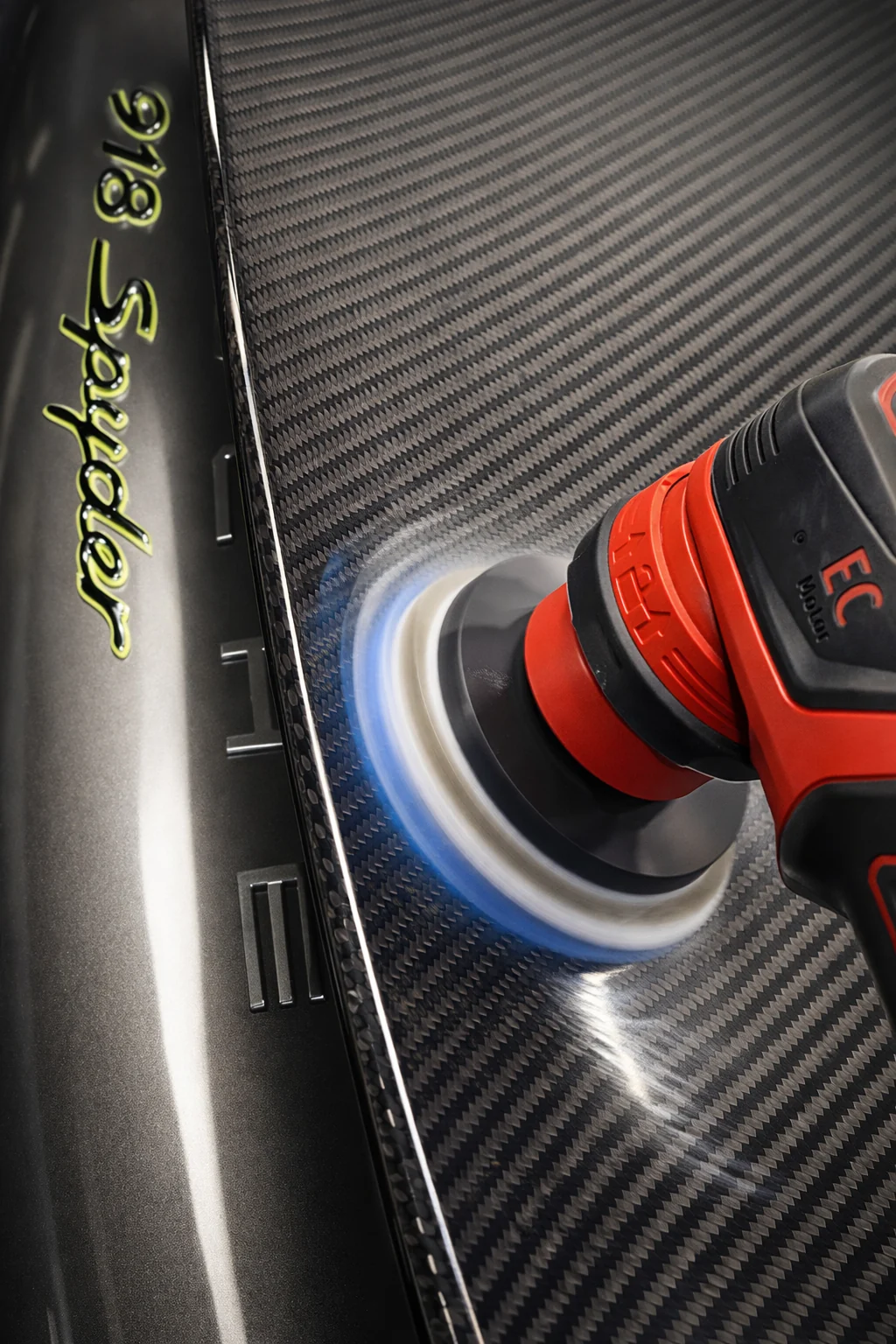
The order matters. If genuine defects are noticed at handover, the German automobile club ADAC advises recording them in the handover report, photographing them and informing the dealer in a verifiable way. The dealer must then fix them within a reasonable period. Anyone who has such a defect polished away beforehand may lose the evidence.
Which protection fits
| Measure | Makes sense if … | Usually not needed if … |
|---|---|---|
| Inspection | always – it costs little and prevents unnecessary work | – |
| Paint correction | the inspection shows visible wash marks or holograms | the paint is clean; every polish removes clear coat that does not grow back |
| Ceramic or sealant | you want easier care and wash gently | the car regularly goes through brush car washes |
| Film on the front | lots of motorway driving or a vehicle where stone chips are especially annoying | the car mainly does short trips |
| Full wrap | there is a specific reason, such as a special paint or very high standards | the main goal is simply a well-kept everyday condition |
How ceramic and film fundamentally differ is explained in detail in the guide Ceramic coating or PPF. You can find our services under ceramic coating and paint protection film.
Protection makes most sense before marks build up – that is, right after handover, not after the first winter. How much work is involved depends mainly on the paint condition. So the rule is: check first, then plan.
Which solution suits which use
Lease car for three years: inspection at handover and gentle washing from the start. With lots of motorway driving, film on the front can make sense. Long-term protection only pays off to a limited extent over a short term.
Family car for many years: inspection, a light correction if needed, then ceramic for easier care. With a smaller budget, a regularly renewed sealant will do.
High-end vehicle with lots of motorway driving: film on the front and heavily exposed areas, ceramic on the rest.
Small budget: inspection at handover and the right washing method. If the paint is flawless, you do not need anything more for now.
Often heard – is it true?
- “A new car does not need polishing.” Not necessarily – it depends. Many modern paints are softer and more sensitive and need more care from the start. Some new cars only need a thorough clean, others already show marks from transport or earlier washes. That can only be answered by checking, not across the board.
- “New paint should “outgas” before it is coated.” Follow the manufacturer’s instructions. Factory paints are cured at the factory. Whether and how long to wait before a coating depends on the specifications of the coating system in question – not on a rule of thumb.
- “The dealer’s paint protection package is the same thing.” In our experience it is usually the worse choice – and anyone who has it corrected afterwards ends up paying twice. Such packages can contain very different things. So ask exactly which product is used and how the paint is prepared beforehand.
My assessment from practice
What I notice most often with new cars: new does not automatically mean the paint is really perfect. Many vehicles already have light wash scratches, fine holograms, isolated paint defects or surface contamination before their first real use. Rail dust, adhesive residue and marks from transport, storage or the preparation before delivery also occur.
That does not mean the manufacturer did a bad job. A vehicle passes through many stations before it reaches the customer. Such marks become especially noticeable on dark paints and under professional inspection lighting.
That is why I look closely at new cars too before I recommend or apply a ceramic coating. But a new car does not automatically need a multi-stage polish. Sometimes a thorough clean and decontamination is enough, sometimes a light finishing polish makes sense.
I decide based on the actual paint condition – not on the mileage or the age of the vehicle.
Tom · Founder & owner of the GlanzSchmiede
Conclusion
Protecting a new car makes sense – but not everyone needs the same thing. It starts with an honest inspection. After that, your use decides whether a sealant, ceramic, film or simply the right washing method is the right solution.
Not sure what makes sense for your vehicle? Then let’s look at it together and discuss which options really match your expectations. Go to the contact page
Sources & further information
- ADAC – New car: everything about delivery and collection (handover, defects, report; German)
- ADAC – Model contracts and checklists (incl. rectification of defects on a new car; German)
Technical statements are based on these sources and have been summarised in our own words and cross-checked. Manufacturer information is identified as such. Personal assessments appear exclusively in the section “My assessment from practice”.
In this guide
- Why a new car is not automatically flawless
- Which protection fits
- Which solution suits which use
- Often heard – is it true?
- Conclusion
Personal advice
We look at your vehicle and tell you honestly what makes sense – and what does not.
Frequently asked questions
Your questions.
How do I wash my new car correctly in the first few weeks?
Most gently with a pre-wash, for example with snow foam, followed by a hand wash with pH-neutral shampoo and two buckets. But only if it is done really carefully – a bad hand wash can do more harm than a good car wash. More on this in the guide Car wash or hand wash.
How do I spot paint problems at handover?
Ideally in daylight and on a clean vehicle. Look for scratches, dents, colour differences between panels and fine circles in backlight. Anything you notice belongs in the handover report.
Personal consultation
Your car.
Your standards.
Our advice.
Tell us what your car needs. We’ll get back to you personally – with a clear recommendation instead of an off-the-shelf package. We welcome clients from Aachen, the Eifel, South Limburg and East Belgium – and we reply in English or German.